Be yourself; Everyone else is already taken.
— Oscar Wilde.
This is the first post on my new blog. I’m just getting this new blog going, so stay tuned for more. Subscribe below to get notified when I post new updates.
Be yourself; Everyone else is already taken.
— Oscar Wilde.
This is the first post on my new blog. I’m just getting this new blog going, so stay tuned for more. Subscribe below to get notified when I post new updates.
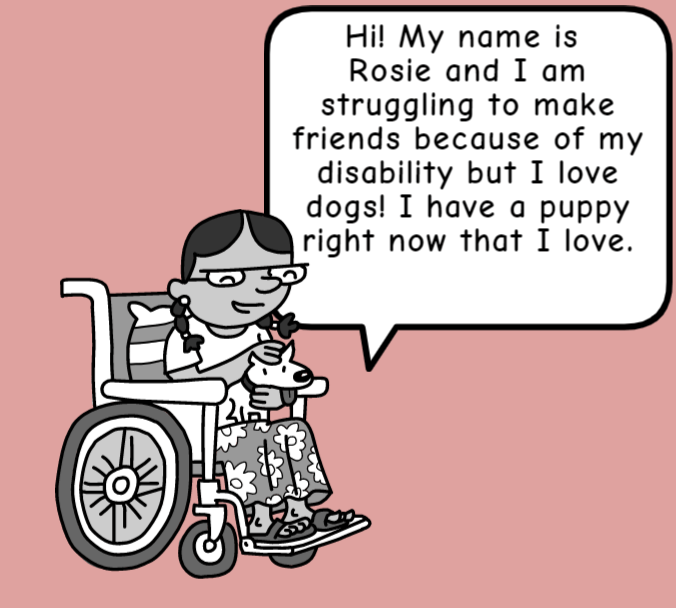
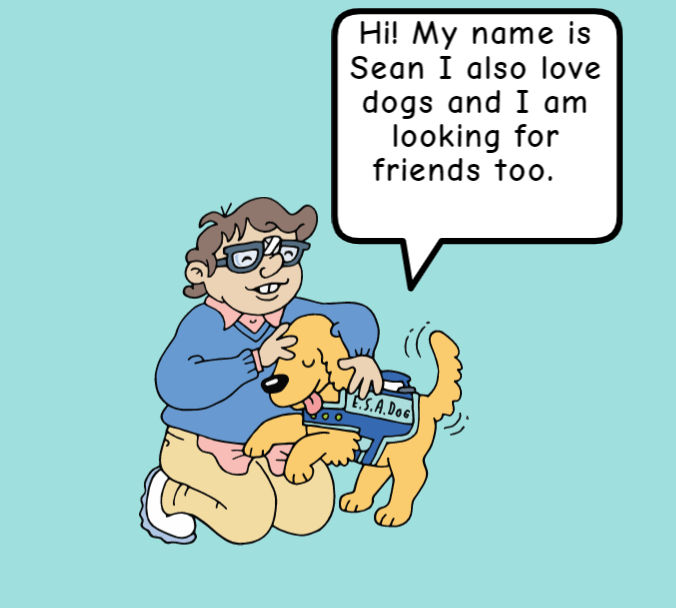
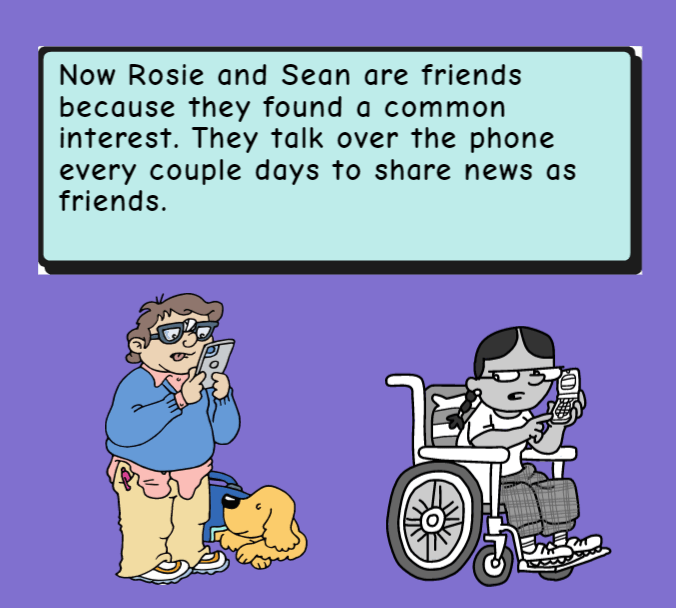
This visualization is to help middle school special education students, in a pull out classroom environment, build their social skills in a life skills class, and more specifically help students make friends. The visualization does this by providing a brief yet straightforward example of how two children found a common interest and became friends. I selected the images and digital platform for this project based on my subtopic, helping students make friends, and student’s needs. From my experience with students that have special needs many do best with information that is straightforward. That is why I decided to create a short comic on Make Beliefs Comix with realistic characters(Rosie and Sean) and some general realistic advice for many students, finding a common interest with someone to bond and become their friend. The pictures in the comic would help with comprehension too for students that struggle with reading in the special education class. For instance, that the two people are alone in pictures with their dogs, but then come together for the last picture and are talking over the phone, now friends.
Creating the visualization deepened my understanding of my topic, helping students make a friend, by applying some knowledge in the form of creating a visualization that reading alone would not have. By having the opportunity to apply this knowledge I not only made the visualization but I got to think through an example of my topic that would be appropriate for my students. This is very important for me as a future teacher because being a teacher is all about being able to apply the knowledge that I know and students need to know to different formats so students can learn. By different formats this could be visualizations like the one I created.
This process has influenced my thinking on visualization as a vehicle for learning and how I might use it in my future teaching. Visualization can be a great vehicle for learning, especially if it is something like this where I make it, to provide examples for students. These examples I could modify depending on the student’s needs and interests especially in a class like life skills. For a class like life skills, as a teacher I could have a lot of flexibility to make the content interesting and fun for students as long as it is still of course educational and meets student’s needs.
My hypothetical group of students for this lesson would be middle schoolers who receive special education services for a disability(Autism, ADHD, a health condition, etc). The lesson with this group of texts I have selected would be for students to learn that they are not alone with their disability and learn about other disabilities that students in their class may have. Furthermore, I think this would be a great lesson and set of texts for the beginning of the school year to create an inviting and inclusive classroom for all students.
In Print- Just Ask! Be Different, Be Brave, Be You
Citation-
Sotomayor, Sonia, and López Rafael. Just Ask! Be Different, Be Brave, Be You. Philomel Books, 2019.
A read aloud of the text is available below-
Summary-
In this book every child, no matter their abilities, is celebrated and incorporated into building a community garden. Different children with unique challenges and abilities are introduced one by one. Each child briefly describes his or her disability and abilities and encourages the readers to Just Ask when you see someone that looks different from you and you have a question.
Text complexity-
The StoryToolz readability test had these results for a quantitative text complexity-
Flesh-Kincaid Grade Level- Grade 6.7
Automated Readability Index- Grade 6.5
Coleman- Liau- Grade 7.6
Flesch Reading Ease 74.3/100
Gunning fog index- Grade 9.9
Laesbarhedsindex (LIX) Formula- 32.6= below school year 5
SMOG Index- Grade 9.5
Average Grade Level- Grade 8(Mean of above)
I would agree with this assessment because of the sentence structure which may require a more experienced reader. I will say though if read a lot in class with the proper instruction this book could be read to students a couple grades below like to 6th graders. It also has pictures to help with comprehension too. Some vocabulary terms students may need instructional support for are diabetes, pricking your finger to check your sugar level, inhaler, asthma, sign language, Deaf, dyslexia, autism, Tourette’s, ADHD, and Down’s syndrome. From a qualitative text complexity standpoint it could be more challenging because readers need to consider other kids’ experiences and the difficulties they go through to fully understand the purpose.
Task and reader complexity-
The purpose of this text is to build empathy for people with different disabilities and abilities. This does not build on students’ cultural assets unless you consider that the reader or the readers’ family member(s) may have one or more of the conditions described which may impact culture. The complexity of the task to be paired with the text is to consider others’ experiences and how they can add to the garden, or society, which can be difficult for students especially if they are young, don’t have much prior knowledge, and are not motivated.
To learn more about this text click on the link below-
Multimedia Text– Be A Game Changer
Citation-
Be A Game Changer [Video file]. (2017, March 29). InYoutube. Retrieved April 1, 2020, from https://www.youtube.com/watch?v=VIzgPIWuc4U
Summary-
This is a motivation video by the Special Olympics. The video invites the audience to think of a generation that is respectful, inclusive, and a game changer. Then it is revealed that this is our generation.
Reader complexity- The StoryToolz readability test had these results for a quantitative text complexity-
Flesh-Kincaid Grade Level- Grade 7.4
Automated Readability Index- Grade 5.7
Coleman- Liau- Grade 9.4
Flesch Reading Ease 55.3/100
Gunning fog index- Grade 11.9
Laesbarhedsindex (LIX) Formula- 41.8= school year 7
SMOG Index- Grade 10.1
Average Grade Level- Grade 8.9(Mean of above)
I would agree with this assessment because of the figurative language that is used which could be confusing for younger students. From a qualitative standpoint, it was a bit easier because of the visual aids the video contained. Words that students may need help with are generation, acceptance, diversity, inclusion, unity, and game changers.
Task and reader complexity-
The purpose with this text is for students to understand that this generation is capable of being accepting, inclusive, and unified. Students who have struggled to feel accepted hopefully are able to see that there are places and environments where they are able to be accepted like the Special Olympics. For students that have not struggled to feel accepted they are able to see another environment where they would be accepted. It also motivates all students to strive to be a generation of inclusivity and acceptance. This video does build on students’ cultural assets if you consider how inclusive a students’ family is as part of their culture. The complexity of this task paired with the text is not very difficult. I believe almost all middle schoolers and high schoolers have the ability to see that this generation is capable of being inclusive but depending on students prior experiences and knowledge of this it could be challenging. For other students that have positive prior experiences and knowledge on this it would be easier. Finally, I would think all students would be motivated to understand that this generation and each student is capable of being inclusive.
Culturally relevant text- This Is Me – Best Buddies Official Music Video

Citation-
This Is Me – Best Buddies Official Music Video [Video file]. (2018, Feb 26). In YouTube. Retrieved April 1, 2020, from https://www.youtube.com/watch?v=lpUtyppXUZE&list=RDlpUtyppXUZE&start_radio=1
Summary-
This is a music video done by Best Buddies International to the song “This Is Me”. Best Buddies International gives the power of friendship to individuals worldwide with and without an intellectual disability the courage and confidence to stand up for who they are. By standing up for who they are they are able to stand up to bullying and say unapologetically that this is who they are, “This is me”.
Reader complexity- The StoryToolz readability test had these results for a quantitative text complexity-
Flesh-Kincaid Grade Level- Grade 0.5
Automated Readability Index- Grade 1.6
Coleman- Liau- Grade 0.3
Flesch Reading Ease 106.1/100
Gunning fog index- Grade 3.7
Laesbarhedsindex (LIX) Formula- 15.5= below school year 5
SMOG Index- Grade 4.6
Average Grade Level- Grade 1.5(Mean of above)
I would disagree with this report from a quantitative text analysis standpoint. To understand all the figurative language in the lyrics like, “But I won’t let them break me down to dust,” would take a middle schooler I think. Also, the visual images of people with intellectual disabilities having the courage and confidence to stand up and sing, “I make no apologies, this is me,” takes a more seasoned student to fully understand the message’s importance. Some vocabulary terms students may need help with are bullets, barricades, glorious, sharpest words, drown them out, send a flood, and proof. I did include some figurative language too because I think students may need help with those phrases.
Task and reader complexity-
The task for this text is for students to feel motivated and empowered to be who they want to be unapologetically. Examples of this for possible students may be that they want to be a musician or explore their passion for a sport. Furthermore, I want students to know that they are not alone whether they have an intellectual disability, a physical disability, no disability, etc. This text could build on students’ cultural assets depending on if they come from a culture where people are unapologetically themselves, confident, or like pop music. The complexity of the task to be paired with the text matches the students’ motivation and prior knowledge well. With a text and a task like this I think a class discussion would be very beneficial.
Additional sources-
Telgemeier, Raina. Guts. Scholastic, 2019.
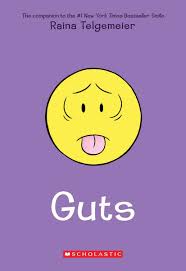
This is a graphic novel about a young girl with health problems and her journey juggling health problems, school, friends, and her family life.
Marvelous Max – Autism Awareness for Kids [Video file]. (2015, July 7). In YouTube. Retrieved April 1, 2020, from https://www.youtube.com/watch?v=wc77MksM_2c&t=7s
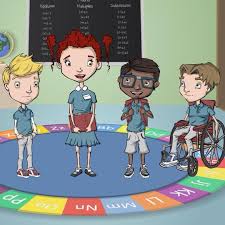
This is an educational video for kids on Autism in order to build Autism Awareness.
Fight Song Sign Language [Video file]. (2015, June 15). In YouTube. Retrieved April 1, 2020, from https://www.youtube.com/watch?v=GUh4JnmcyAE
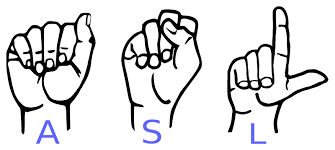
This is a Fight Song cover done in American Sign Language, ASL, to bring attention to how awesome ASL is for any students that use it and potentially interest students that don’t in learning some ASL signs. Additionally this song as a whole is just an uplifting and motivational song that is culturally relevant to students.
The topic I want to explore is how I can assist my students with special needs outside of course content. I know that a fair number of special education students struggle making friends and need social skills help. One resource that I mentioned in my first blog that I know a fair amount about is the organization Best Buddies.
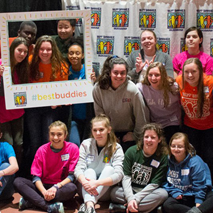
They help students make one to one friendships and I was a part of this club in high school. I want to know though how you get a chapter started and what other resources they offer for students. For instance, they have an international conference each year in Indiana at the university there that I attended but I do not know if students with special educational needs can attend on their own. I know it could definitely be beneficial if they could because there are a lot of awesome resources, people, and speakers there. Besides clubs at schools Best Buddies offers integrated employment and leadership opportunities which I want to learn about in addition to the history of Best Buddies like how it was started and grew to the size it is today. Something that would also be useful to learn is how to assist my special education students with their social skills, like with a one on friendship through Best Buddies.
To lean more about Best Buddies and their mission please click the video below to watch a short, fun, and engaging video about Best Buddies.
To learn more about Best Buddies Wisconsin click the link below
To hear about a friendship through Best Buddies clink the link below
Additionally, I what to know what other programs or resources are out there for children and adolescents with special needs specifically in the Milwaukee area. These programs could be for socializing and making friends, getting and keeping a job, or day programs for students that are transitioning to life after high school. I want to know too how you access these programs, what they look like, and what they have to offer to clients.
To learn about Club Curative which is a day program in Milwaukee for adults ages 18-29 with a developmental disability clink the link below.
https://www.curative.org/Curative/Services/Adult-Day-Services/Club-Curative.htm
To learn about a job service for people with disabilities clink the link below
Hello my name is Emily Dettinger and welcome to my blog! I am a sophomore studying special education K-12th grades although I am leaning towards teaching in a high school. Eventually I would love to help students with the transition from high school to a job, a day program, college, or whatever my high school students want to transition to. Furthermore, I am very interested in helping my future students with their social/life skills if they need assistance in these areas. In high school I was a part of Best Buddies which helps students with special needs make one on one friendships with students. Through this program I learned how many students with special needs struggle with the transition out of high school. If you would like to learn more about Best Buddies I have included the link to their website. Thanks! https://www.bestbuddies.org/

Hello my name is Emily Dettinger and welcome to my blog! I am a sophomore studying special education K-12th grades although I am leaning towards teaching in a high school. Eventually I would love to help students with the transition from high school to a job, a day program, college, or whatever my high school students want to transition to. Furthermore, I am very interested in helping my future students with their social/life skills if they need assistance in these areas. In high school I was a part of Best Buddies which helps students with special needs make one on one friendships with students. Through this program I learned how many students with special needs struggle with the transition out of high school. If you would like to learn more about Best Buddies I have included the link to their website. Thanks! https://www.bestbuddies.org/
This is an example post, originally published as part of Blogging University. Enroll in one of our ten programs, and start your blog right.
You’re going to publish a post today. Don’t worry about how your blog looks. Don’t worry if you haven’t given it a name yet, or you’re feeling overwhelmed. Just click the “New Post” button, and tell us why you’re here.
Why do this?
The post can be short or long, a personal intro to your life or a bloggy mission statement, a manifesto for the future or a simple outline of your the types of things you hope to publish.
To help you get started, here are a few questions:
You’re not locked into any of this; one of the wonderful things about blogs is how they constantly evolve as we learn, grow, and interact with one another — but it’s good to know where and why you started, and articulating your goals may just give you a few other post ideas.
Can’t think how to get started? Just write the first thing that pops into your head. Anne Lamott, author of a book on writing we love, says that you need to give yourself permission to write a “crappy first draft”. Anne makes a great point — just start writing, and worry about editing it later.
When you’re ready to publish, give your post three to five tags that describe your blog’s focus — writing, photography, fiction, parenting, food, cars, movies, sports, whatever. These tags will help others who care about your topics find you in the Reader. Make sure one of the tags is “zerotohero,” so other new bloggers can find you, too.

 Emily's Currins 545 Blog